
Issuer Declines
Risk controls and bank declines (e.g., insufficient funds, policy rules)
Not Just Failed Transactions.
Every failed transaction represents a potential customer lost at the final step of conversion. Businesses invest heavily in customer acquisition, only to lose willing buyers at checkout.
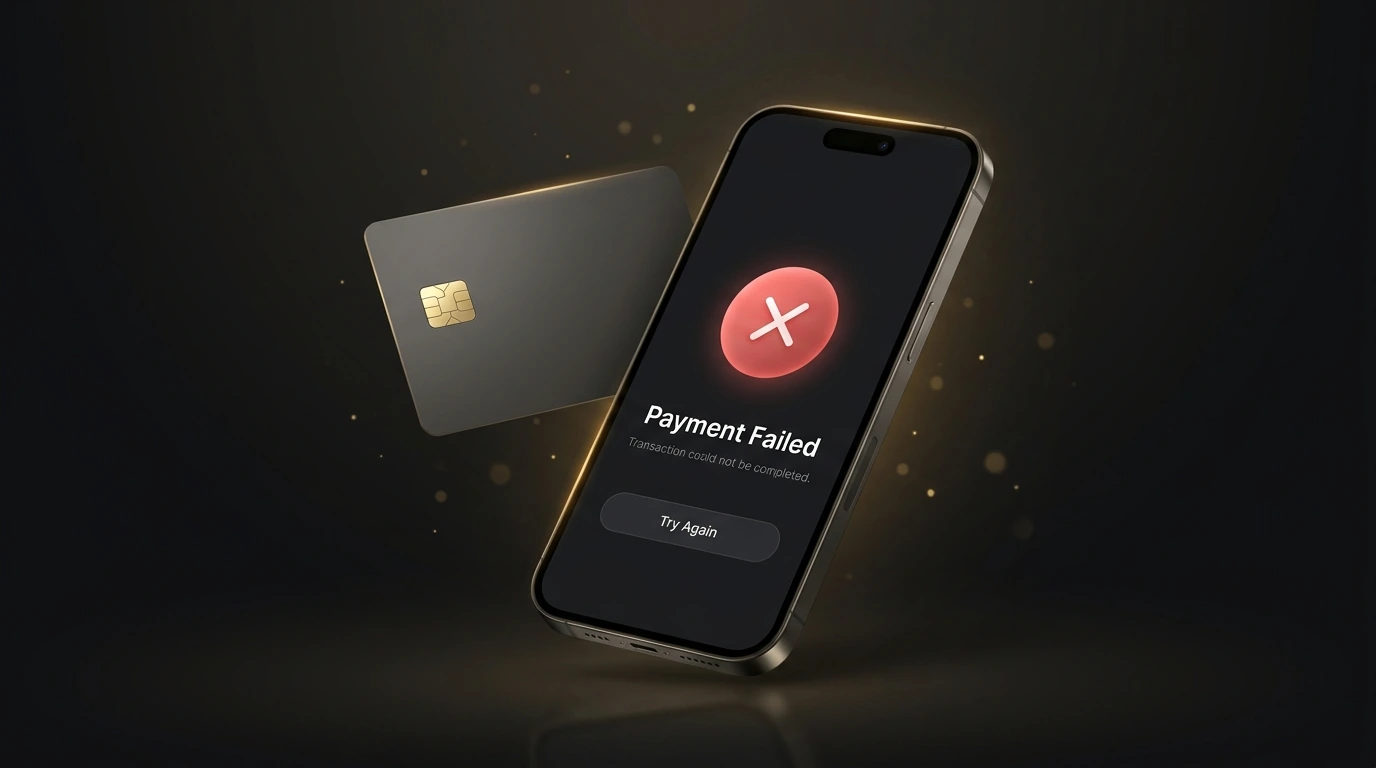
Businesses invest heavily in customer acquisition. Yet payment failures can prevent willing customers from completing purchases.
Customer acquisition cost (CAC) continues to escalate across digital commerce platforms. When a buyer completes the acquisition funnel only to face a decline at checkout, the cumulative marketing budget invested to drive intent is permanently lost.
Risk controls and bank declines (e.g., insufficient funds, policy rules)
Friction in payment journeys (e.g., OTP, 3D Secure)
Suboptimal routes across acquirers and processors
Gateway errors, timeouts and network disruptions
A payment involves multiple steps across different parties. A failure at any point can stop the transaction from being completed.
Crucially, payments industry data reveals that a substantial share of failed transactions are not caused by insufficient funds. Instead, they stem from preventable friction: stepped-up 3DS friction, latency spikes across upstream gateways, and rigid single-acquirer routing bottlenecks.
Failures typically arise from a combination of issuer declines, authentication friction, gateway issues, technical errors and suboptimal routing.
Parsing standardized ISO decline response codes allows businesses to separate hard terminal rejections from transient infrastructure errors. Paired with issuer-level telemetry, product teams can identify underperforming issuing banks, calibrate risk rules to minimize 3DS challenge rates, and continuously monitor authorization velocity to protect baseline gross merchandise value.
Instead of stopping at the first failure, transactions can be re-evaluated and retried through an alternative route to improve the chance of success.
By dynamically evaluating transaction risk, BIN routing, and processor health in real time, eligible soft declines are automatically cascaded to alternative payment processors before failing the customer journey. Hard declines are respectfully excluded to maintain card scheme compliance.
Completed orders meeting authorization criteria without customer friction.
Payment failures create avoidable revenue leakage by preventing otherwise willing customers from completing their purchase. Recovering a portion of these failures can protect conversion and drive incremental revenue.
When transaction resilience is treated as a strategic commercial lever rather than merely a technology SLA, marginal gains in authorization directly compound customer lifetime value and lower blended customer acquisition cost.
“How much potential revenue are we losing because customers cannot complete their payments?”