
Improve Collection Efficiency
Reduce cash handling and support digital collection across apps, counters, vehicles and terminals.
Powering seamless, scalable digital mobility — across ride-hailing, buses, rail, airlines and urban transport through payment integrations, partnerships and connected infrastructure.
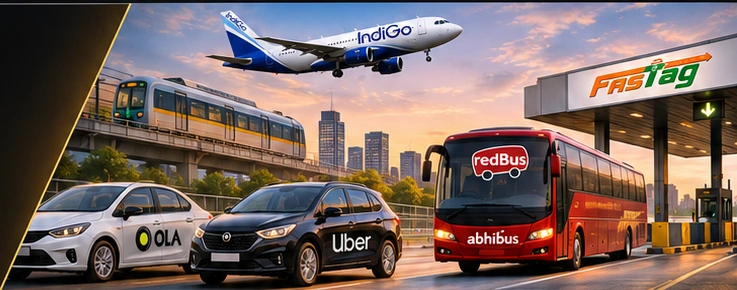
Digital payments are electronic transactions that allow customers and businesses to send, receive and manage money without relying on physical cash. In mobility, they connect the booking or ticketing experience to payment acceptance, authorisation, processing, refunds, reconciliation and settlement.
The exact participants and sequence vary by payment method, platform design, acquiring arrangement and settlement model.
Reduce cash handling and support digital collection across apps, counters, vehicles and terminals.
Offer convenient payment choices at booking, ticketing, boarding and checkout.
Build more structured workflows for refunds, reconciliation and partner payouts.
Support wallets, prepaid balances, passes, recurring charges and repeat journeys where suitable.
Use payment data to monitor success rates, failures, collections and operational exceptions.
Connect mobility platforms with banks, payment providers, aggregators and acceptance networks.
Different mobility models have different payment needs — from a one-time booking to high-frequency transit, tolling and enterprise transport collections.
In-app payments, UPI and card acceptance, wallet balances, driver payouts, cancellations and refunds.
Online ticket booking, payment gateway integration, seat inventory checkout, refunds and operator settlements.
Digital ticketing, QR payments, contactless cards, NCMC and transit fare collection on enabled networks.
Flight booking payments, ancillary purchases, add-ons, cancellations and refund journeys.
Vehicle-linked toll payments, cashless parking entry and exit, merchant collections and reconciliation.
Charging-session payments, wallet top-ups, app-based acceptance and roaming across compatible networks.
Employee transport billing, enterprise accounts, trip reconciliation and consolidated payment reporting.
Use-case availability depends on the operator, payment method, technology integration, regulatory requirements and participating service providers. The cards describe application areas, not a claim that every feature is deployed by every operator.
Conceptualised and led strategic mobility partnerships and payment solutions, enabling seamless, cashless and scalable transactions across cabs, buses, rail, air and transit networks.
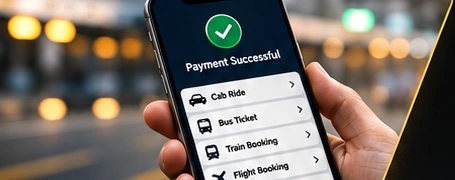
Enabled digital payments and wallet acceptance, improving user conversion and transaction success across cab platforms.
Drove payment integrations and helped create smoother ticketing and refund journeys for intercity and private bus travel.
Worked on partnerships and payment integration for rail travel, ticketing and value-added services to expand digital payment adoption.
Built and scaled digital payment acceptance, supporting smoother booking and payment experiences for air travel.
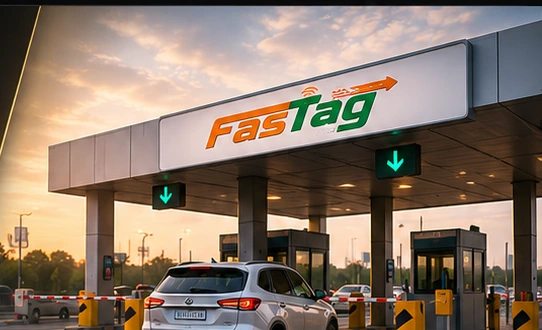
Extended FASTag beyond highways to parking, fleets and urban transit, enabling cashless access, parking collections and merchant acquiring at mobility locations.
Developed a unified mobility payments approach — from consumer payments to enterprise use cases, including wallets, UPI, cards, EMI/BNPL and acquiring.





Built mobility partnerships across ride-hailing, buses, rail, air and transit.
Enabled faster, safer and cashless payments across multiple mobility journeys.
Drove digital payment usage, subscription and repeat transactions across mobility platforms.
Created value through payments, acquiring, parking and enterprise mobility use cases.
Mobility is not one payment category. A passenger may pay for a cab, intercity bus, train or flight through different platforms, each with its own checkout, refund, reconciliation and customer-service requirements. Transport operators and travel platforms need payment experiences that reduce friction while supporting reliable collections across high-volume digital journeys.
Afzal's mobility work brought together partnerships, payment acceptance and distribution across road, rail and air travel. The proposition was to connect mobility platforms with payment methods and banking capabilities that support customer convenience and scalable commercial operations.
The work spanned wallet acceptance and digital payment integrations, with the broader toolkit including cards, UPI, EMI/BNPL and acquiring where relevant. Partner requirements differed by business model: ride-hailing platforms needed convenient in-app payments; bus and rail journeys involved ticket purchase and post-transaction servicing; airline bookings required dependable payment acceptance within a time-sensitive checkout flow.
The approach was to align the payment and partnership model to each platform's customer journey, commercial structure and operational requirements. It connected consumer-facing mobility payments with enterprise use cases such as parking, fleet FASTag and transit collections.
Mobility and travel relationships included Meru, Ola and Uber across ride-hailing; RedBus and AbhiBus across intercity bus travel; IRCTC across rail booking; and IndiGo across air travel. These names represent platforms and partner ecosystems in which Afzal worked on partnerships, integrations or payment-related initiatives. They should not be read as a claim that every payment rail or product was deployed identically across every platform.
His wider payments experience also included integrating providers such as Adyen, Stripe and Paysafe, alongside regional payment-provider relationships. This brought a cross-border perspective on payment acceptance, local methods and transaction performance across multiple markets.
The work expanded the reach of digital payment capabilities across multiple travel modes and supported a more connected mobility payments proposition. It brought ride-hailing, bus, rail and airline journeys into the same strategic view, while connecting consumer payments with FASTag, parking and transit use cases.
Specific platform-level transaction volumes, conversion uplifts and payment success rates are not stated because verified, attributable figures were not provided for each partner. The defensible impact is the breadth of the partnership ecosystem, the payment and distribution capabilities developed, and the creation of adjacent enterprise opportunities in mobility and transit.
KNOW THE ECOSYSTEM
Mobility systems leverage a multi-modal payment stack including UPI AutoPay and one-click intents for ride-hailing, NETC FASTag RFID for tolls and parking, open-loop RuPay NCMC contactless cards for metros and buses, and stored-value digital wallets for instant micro-transactions.
Strategic banking and payment alliances provide embedded checkout experiences, reduce payment latency, decrease checkout drop-offs via direct gateway routing, and enable automated instant refunds for cancellations.
