How NCMC works
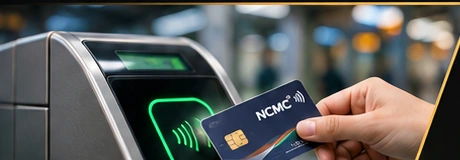
The exact flow differs between offline stored-value and online/account-based transactions, and depends on the operator's implementation.
Built and led the NCMC business at Airtel Payments Bank — from strategy and product development to tender execution and transit partnerships with leading metro networks.

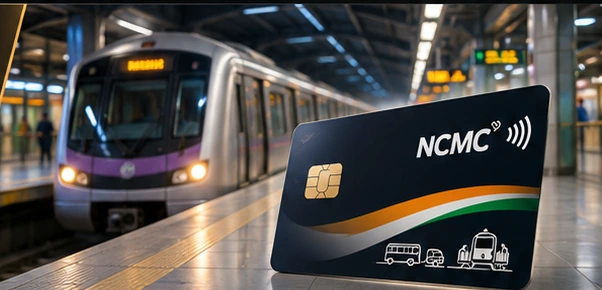
The National Common Mobility Card (NCMC) is an interoperable, RuPay-based contactless payment card designed to support public-transport payments and wider everyday payment use cases. Depending on the card, issuer certification, operator configuration and acceptance infrastructure, it can combine a bank-linked payment instrument with a stored-value wallet for eligible offline transactions.
The exact flow differs between offline stored-value and online/account-based transactions, and depends on the operator's implementation.
These are programme use cases supported by RuPay Contactless/NCMC materials; availability depends on local operator deployment and acceptance infrastructure.
Contactless fare payment across participating metro rail and urban transit systems.
Tap-based ticketing on compatible bus ticketing and fare-collection systems.
Contactless payments at enabled parking locations, terminals and operator networks.
Potential use in toll and road-mobility payment environments where NCMC acceptance is deployed.
RuPay contactless acceptance at participating retail and merchant locations.
Potential integration with campus transport, access, canteen and other closed or semi-closed service environments.
Primary references: NPCI RuPay Contactless overview · NPCI NCMC – Tap & Transit whitepaper · MoHUA NCMC guidance notes
A practical starting point for banks, transit operators, system integrators and businesses evaluating NCMC issuance, acceptance or programme participation.
Official programme, technical and operational references.
Find certified issuer information and understand how cards reach customers.
NCMC cards may be issued through certified banks' branches and other service channels. Instant issuance at transit-operator service points may be undertaken by a selected partner bank where the operator's model requires it.
Important: NPCI's public references identify certified/live member banks; they do not establish a single complete public directory of every distributor or agent. Distribution channels should therefore be confirmed with the relevant issuer bank.
Reference links are provided for information. NPCI may update document locations, certification status and programme requirements; users should verify current applicability directly with NPCI and the relevant issuer or operator.
Conceptualised and developed Airtel Payments Bank's NCMC strategy and product line, enabling interoperable, contactless and digital ticketing solutions across metro and urban transit networks in India.

Created the online/mobile smart-card recharge line of business at Airtel Payments Bank and drove OSR-01/2021 tender groundwork and submission. The DMRC LOA was issued after his departure from Airtel Payments Bank.
Participated in the NCMC EMV-based AFC tender through an Airtel Payments Bank–PayCraft Solutions consortium, with Airtel identified as lead member.
Introduced QR-based payment acceptance at Mumbai Metro stations, enabling a simple, cashless and digital commuter experience.
Reviewed tender documentation for a Phase IV and network-upgrade AFC opportunity with an approximate NIT cost of ₹411.61 Cr inclusive of taxes and duties.
Developed Airtel Payments Bank's NCMC strategy across prepaid and account-based ticketing and worked on metro/transit RFPs and government stakeholder coordination.


Set up NCMC business and transit payment capabilities at scale.
Led groundwork and participated in key metro AFC and NCMC tenders.
Enabled QR and contactless acceptance across metro station journeys.
Strengthened Airtel Payments Bank's positioning in urban mobility and government transit programmes.
Metro and urban transit networks need payment systems that support fast passenger movement, reliable fare collection and convenient access across modes. The National Common Mobility Card (NCMC) creates a framework for interoperable contactless mobility payments, while QR acceptance and digital recharge channels can extend access to passengers using different devices and payment preferences.
At Airtel Payments Bank, Afzal developed the bank's NCMC strategy and product line across prepaid and account-based ticketing pathways. The work connected product strategy with metro procurement, partner coordination and government stakeholder engagement, helping establish the bank as a credible participant in the transit payments ecosystem.
The NCMC proposition involved evaluating how the bank's prepaid and account-based capabilities could participate in transit ticketing and fare-collection environments. EMV-based open-loop acceptance, transit AFC integration, customer onboarding and digital servicing were important parts of tender and partner discussions. Scope and delivery responsibilities depended on each metro's procurement requirements and consortium structure.
For DMRC OSR-01/2021, Afzal created the online and mobile smart-card recharge line of business at Airtel Payments Bank and drove tender groundwork and submission. The DMRC letter of award was issued after his departure from the bank; originating the business and the later award are distinct milestones.
For Gujarat Metro Rail Corporation's Surat Metro, Afzal participated in the NCMC EMV-based AFC tender through an Airtel Payments Bank–PayCraft Solutions consortium, with Airtel identified as lead member. This describes consortium participation and does not imply that the tender was awarded to the consortium.
At Mumbai Metro, he introduced QR-based payment acceptance at stations. He also reviewed DMRC AFC DS24 tender documentation for a Phase IV and network-upgrade opportunity with an approximate NIT cost of ₹411.61 crore inclusive of taxes and duties. Reviewing the opportunity does not imply that a bid was awarded or a contract delivered.
The work created a defined NCMC and transit payments strategy for Airtel Payments Bank, established the online/mobile DMRC smart-card recharge business line and advanced the bank's participation in metro AFC and NCMC procurement processes. It brought together product development, digital servicing, tender preparation and institutional stakeholder management.
The outcomes are ecosystem and capability building: a transit-focused line of business, participation in strategic metro opportunities, QR payment acceptance at Mumbai Metro stations and a roadmap spanning prepaid and account-based ticketing. The ₹411.61 crore figure is an approximate tender NIT cost, not revenue earned by the bank or personal financial impact.

KNOW THE ECOSYSTEM
NCMC is an interoperable contactless smart card standard developed in India for seamless travel across metro rail, buses, suburban rail, toll booths, and parking facilities, while also functioning for retail payments.
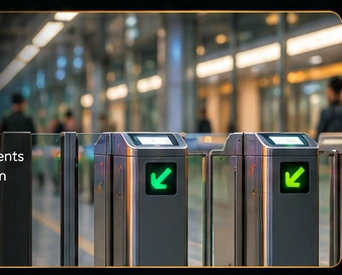
NCMC operates on dual-interface EMV technology (qSPARC), processing sub-second offline transactions at Automatic Fare Collection (AFC) turnstiles with subsequent clearing and settlement handled via NPCI networks.
I regularly share insights and frameworks on fintech partnerships, banking alliances, NCMC, and mobility payments. Let's connect and exchange notes on LinkedIn.